

All right, so I am going to simply push restart on this Substack. I wasn’t working on it for a while because I didn’t like the process of using AI, rewriting it, using more AI, and rewriting it again. It felt like junk and really wasn’t me. So, I’m restarting this, and I’ll get into the investing research here real quick, but first I just want to say: I need to enjoy the process. I enjoy writing, so everything here will be written by me. I’m not sure how it will go, but it will be authentic and I’m going to enjoy doing it.
If you read this I'll make you the following promises: you’ll have a complete understanding of this whole new thing called A Neocloud. You will understand each of these companies business models, Applied Digital (APLD), Nebius (NBIS), IREN (IREN) and Coreweave (CRWV). You will understand which ones you might want to invest in. The reason for this article is that a lot of people on Reddit and across financial media believe these companies have the potential to be re-rated much higher. That fits our thesis here. If you’ve been even loosely paying attention to news headlines, you’ve seen Nebius, NBIS and IREN signing multi-billion-dollar contracts with Microsoft and Google, so they certainly warrant a much deeper look.
Applied Digital signs $5.2 billion AI data center lease
So a Neocloud is a specialized computing company that rent out high performance GPU’s. They utilized specialized software to help run massive machine learning workloads and AI-specific training and inference loads.
Why do Neoclouds exist? Why doesn’t Microsoft just build these themselves?
Speed and Power. Getting a new facility running can take years with permitting, building, grid connections, and so on. So since OpenAI and Anthropic and the rest need compute right now, they are leasing it from these Neoclouds.
The Layers
Before we profile the companies, we need to briefly discuss layers. This below slide comes from NBIS. It will be helpful for us to better understand each company. They show six layers of a neocloud company.
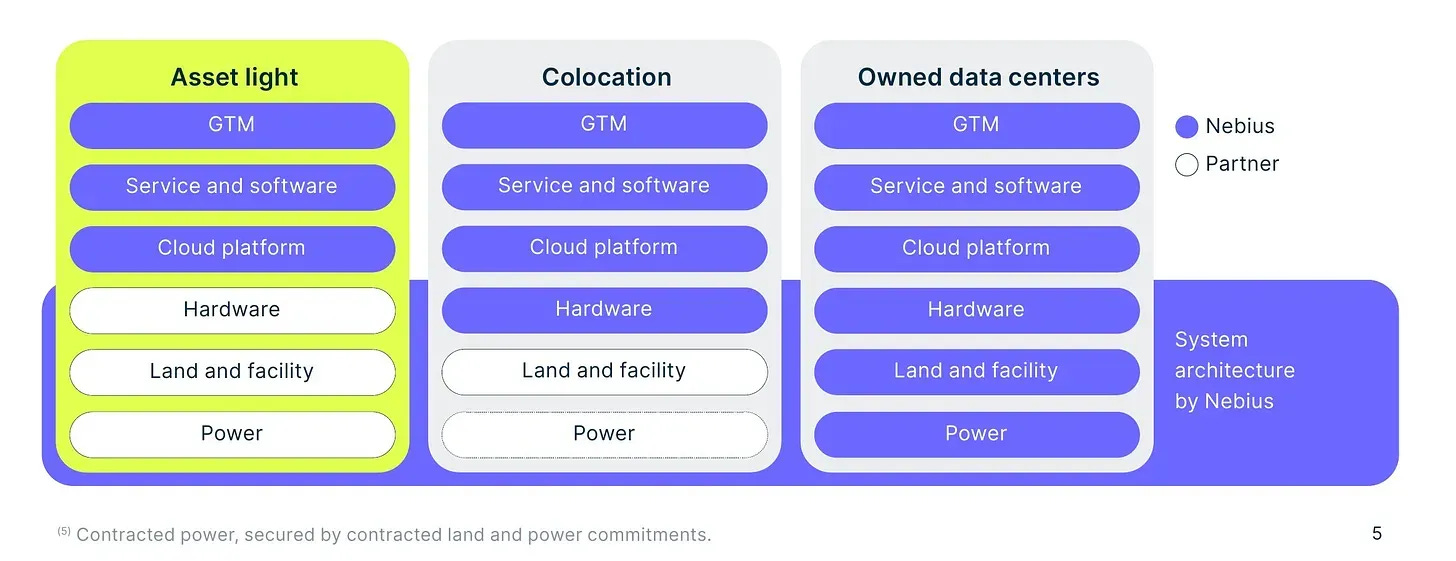
Power. The power layer is control of the interconnect and substation. Quite confusingly, none of these companies actually generate their own power. They own substations, and connections, so they own the power access and some of the infrastructure.
Land and buildings. Specialized, purpose built AI focused buildings.
Hardware. The GPUs and racks, Nvidia and Broadcom and AMD chips, memory and the storage.
Cloud platform. The software that allows the GPU’s to be rented and to become a product for sale. In general, this is the basic software for general computer services and rental.
Service and software. This might seem like an additional software layer, but this is the actual neocloud layer. The cloud platform is simply access to the GPU, however the GPU service and orchestration software is running the massive amounts of data to train a new AI model, and make sure large jobs with massive data can’t crash or can be saved and will operate to completion without fail utilizing scheduling, optimization, failure detection and many other advanced tools. This is what allows them to charge a premium on top of the actual compute and electricity.
GTM or Customer. A positioning layer. Layer one through five are things you own, but layer six is the position you hold. Basically, are you the one that owns the customer relationship. Since so many of the above layers can be rented or outsourced, who holds and sells the compute from all the above?
The 4 Company Profiles
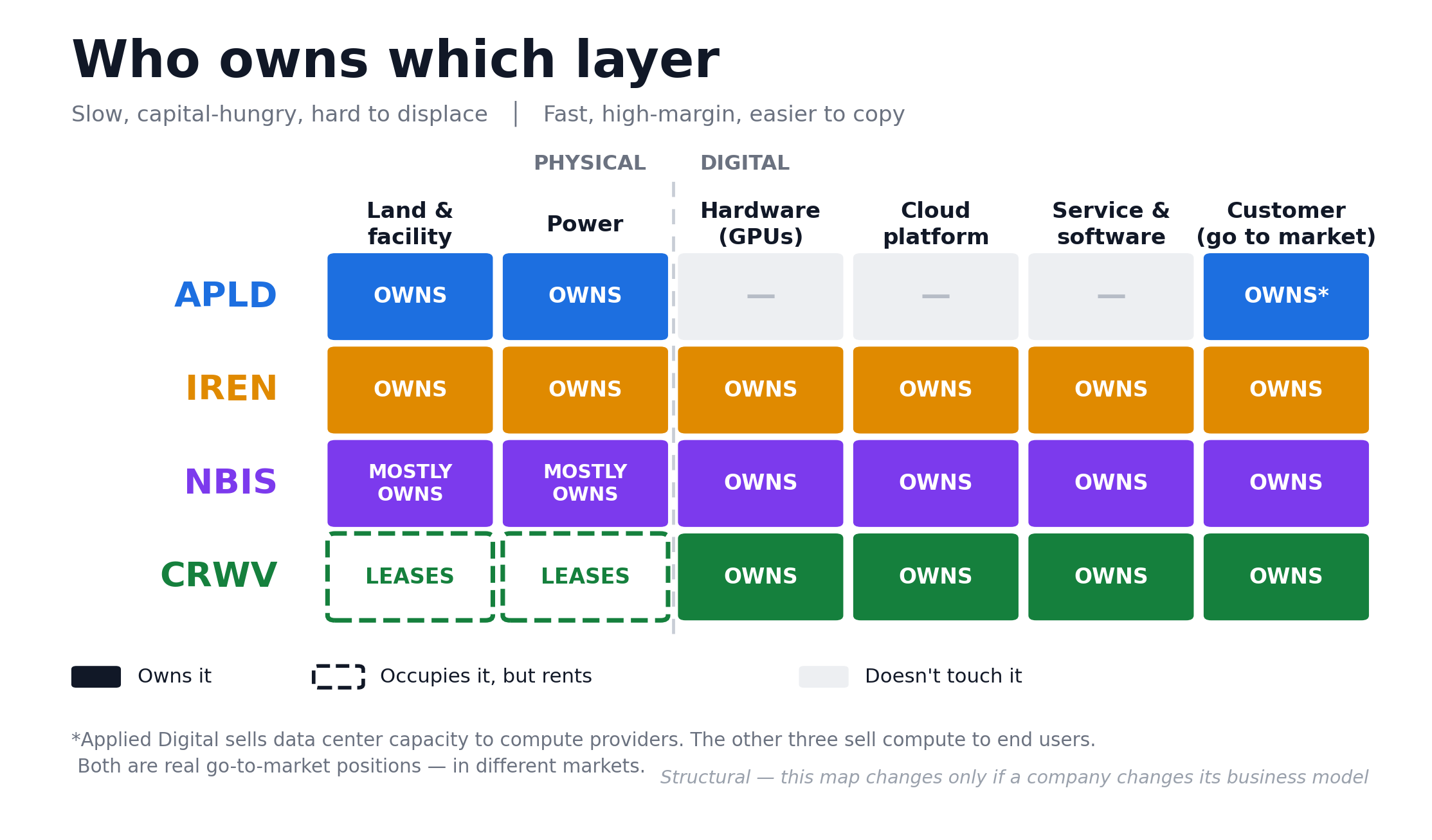
IREN (Iris Energy) —All the layers

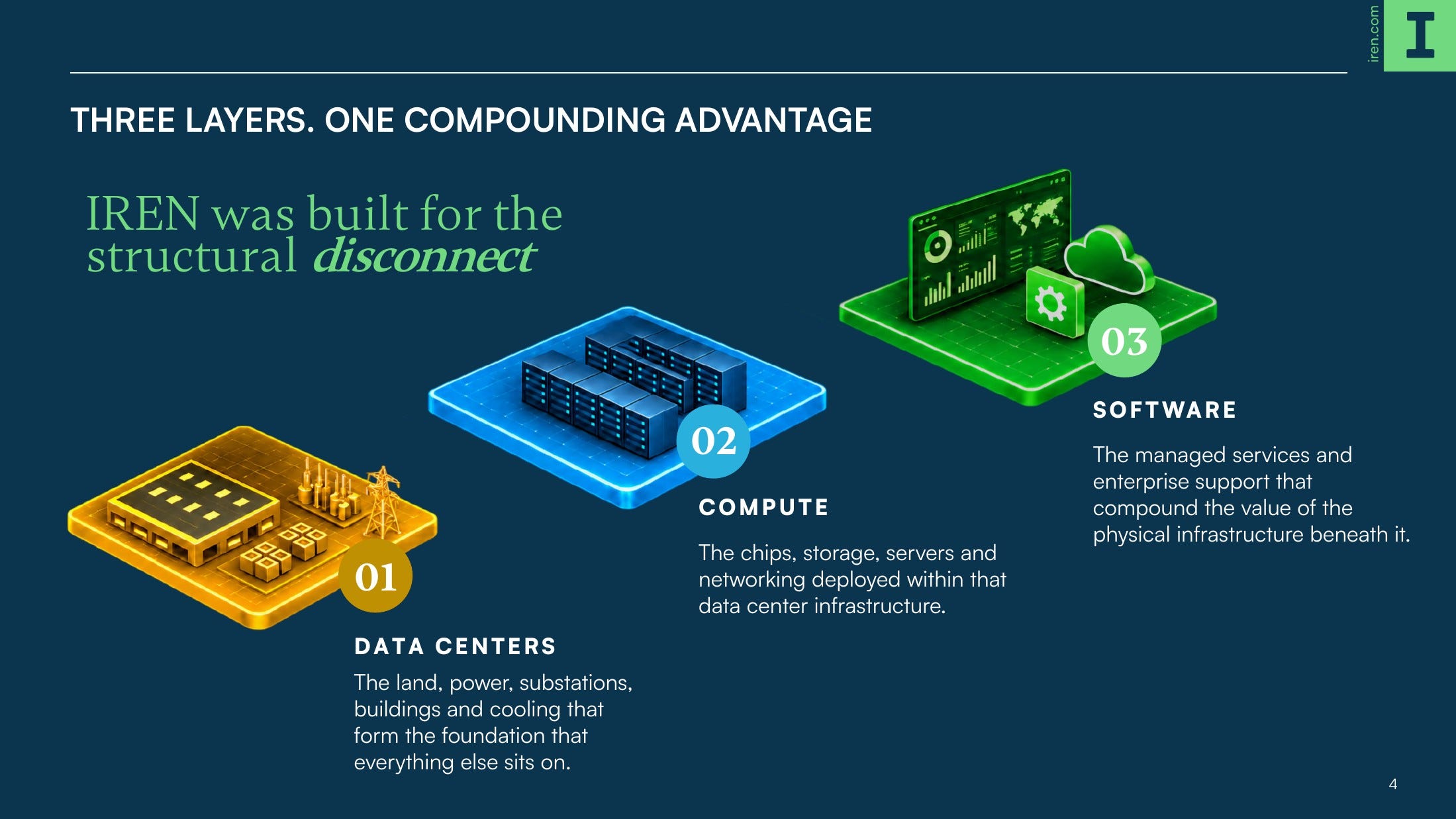
Layers Owned: Layers 1 through 6, they call it three layers, but below you can see from their deck, they operate in all layers across the neocloud framework.
Business Model: Formerly a pure-play Bitcoin miner, IREN is executing a complete transition into a fully vertically integrated AI Cloud platform. They own their power interconnects and land, build their own data centers, buy and host GPUs, and operate their own software stack. Fully owns and finances GPU clusters, directly capturing the margin of high-density AI compute training and inference.
Applied Digital (APLD) - The Landlord

Layers Owned: Layers 1 and 2
Business Model:Applied Digital operates like a specialized AI data center REIT, although they are not a REIT. They secure land, build power interconnects, secure the power contracts, and build AI focused facilities. They rent the facilities to tenants on 15-year contracts.
They own the power & land & buildings but do not own any GPUs. They do not carry hardware depreciation risk, nor face the steep costs of GPUs but also don’t benefit if compute prices swing way up. Their job is simply to collect rent checks from major hyperscalers, including CoreWeave, and remaining legacy hosting tenants, including a Bitcoin operator.
Nebius Group (NBIS) — The Full-Stack Software & Infrastructure Cloud

Layers Owned: Full Stack — Layers 1 through 6, mostly
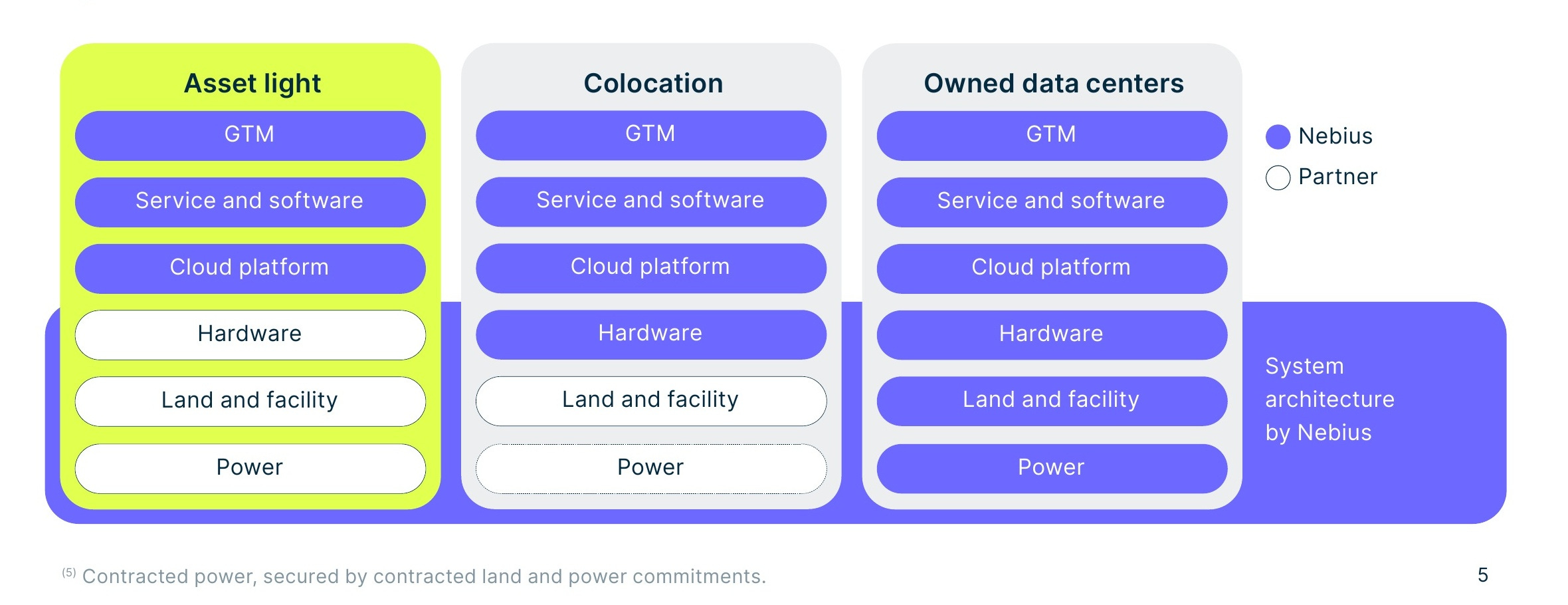
Business Model: Nebius builds and operates its own data center infrastructure while it operates AI software and developer tools to run AI training and inference. It owns the GPUs and physical data center footprint, catering directly to hyperscalers, frontier labs, enterprises and tech companies requiring AI cloud compute. Additionally as seen below they also do some colocation , layers 3-6, and have introduced the asset light business model. This gives partners who may have the hardware, facility and power to now add Nebius’s systems architecture, software stack and customers to begin to offer AI compute and gain more dollar per GPU rented.
CoreWeave — The Specialized Compute Provider

Layers Owned: Layers 3 through 6
Business Model: CoreWeave is the largest pure-play neocloud operator. Unlike competitors, CoreWeave generally avoids real estate development or direct power infrastructure ownership. Instead, they lease facility space and power from developers ,like APLD, and direct their capital into buying GPUs and building AI orchestration software. They have the largest amount of GPUs and GPU compute, that operating as an AI specialized cloud and compute provider for AI developers and hyperscalers.
Power Plan
So much is happening, I’ll cover everything I think is important. So let’s start with power. Whenever they mention power, you need to pay attention to the details. There is “secured power” which means they have a right or are in a line, but it could be simply dirt right now. “Contracted” power could mean many things but is often a substitute for is in process. Many of the largest numbers you will read are contracted power, because it simply means it’s underway. “Connected” means its connected but doesn’t mean there is a customer attached or that it is earning anything. So the ones we care about are “Active or Live” power. That is the actively running amount, that a company is billing for with cash is coming in. The active can also show IT load vs gross, meaning that not all power is sold, some power is used by the facility for cooling and so IT load is what is again the real number here. Much of the below power numbers are changing and coming online in mere months, so here is a close snapshot of how ACTIVE power looks across the companies currently and in the very near future:

IREN
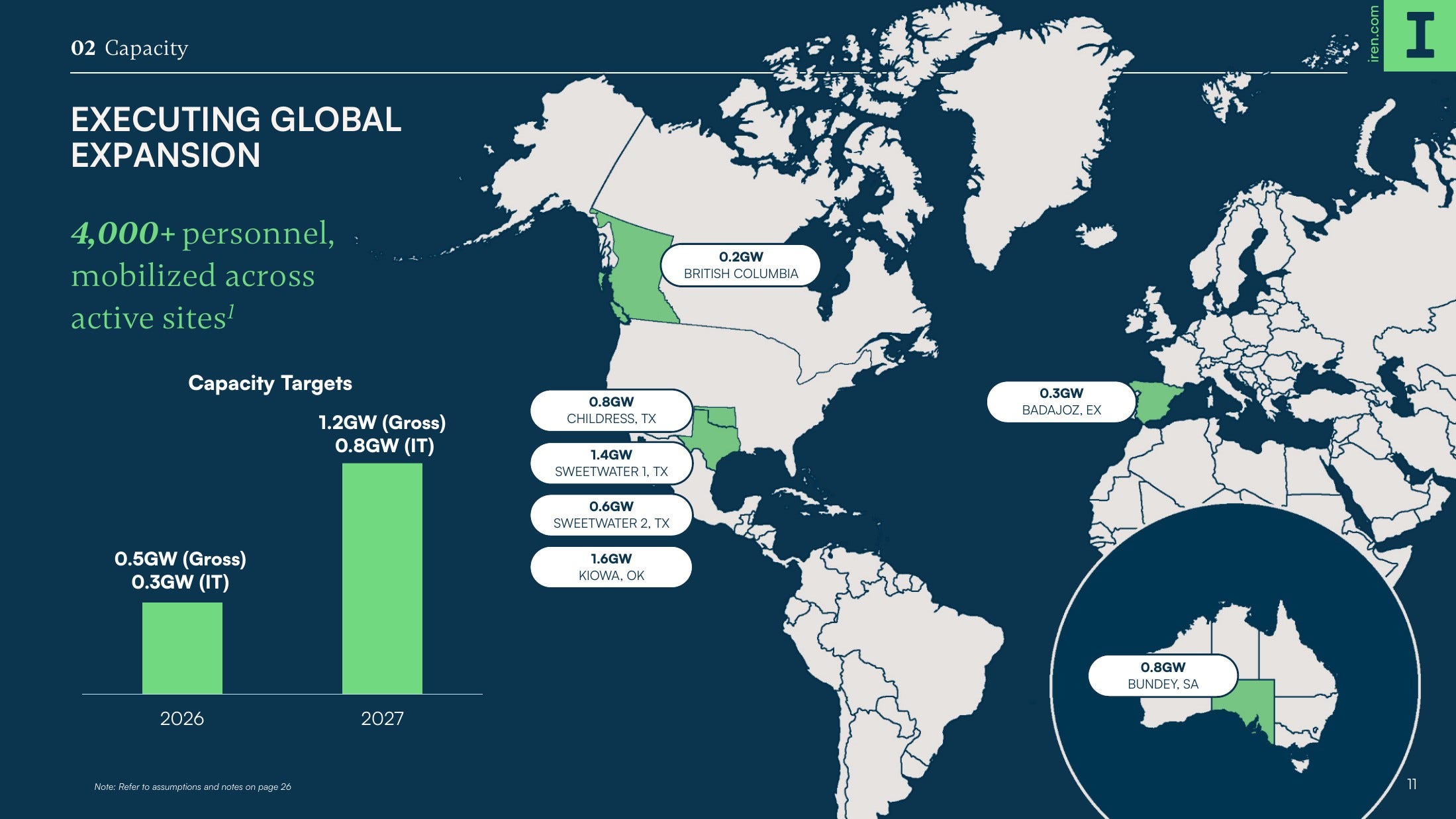
They have about 75-100 MW active power with a goal to have 300 MW active by the end of the calendar year. This company along with others has fiscal years that are not aligned with calendar years. So I am always talking about calendar year. They are building and activating their data center in blocks, so that revenue can commence asap. The upcoming quarter shows them delivering more MW throughout the quarter, reaching up to 300 MW by the end of the year, from their current estimated 75-100MW. The 300 is also IT power, not gross power. They have a stated goal of 800 MW Active, by the end of 2027, and announced plans that total over 5 GW.
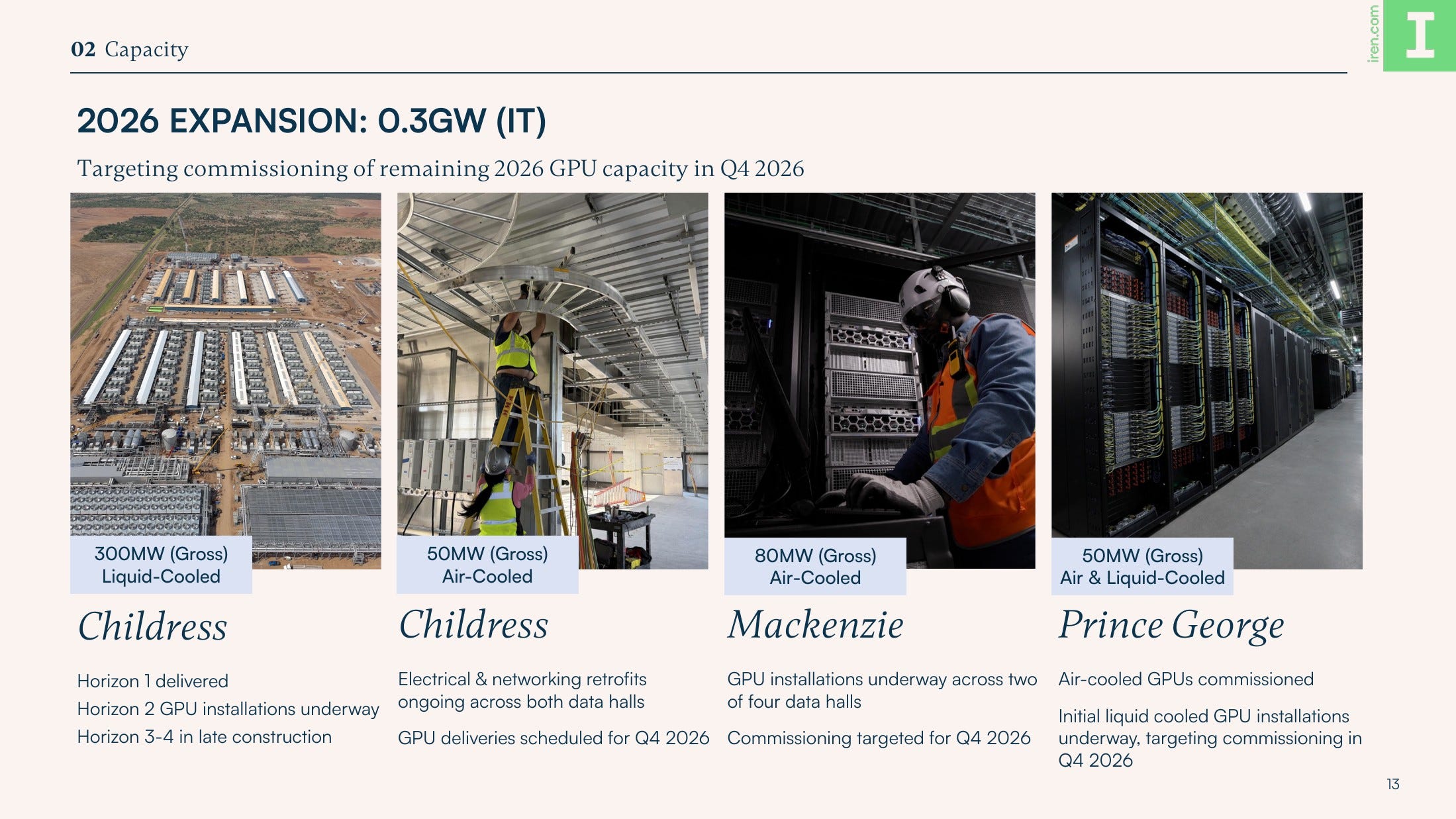
IREN has global data centers, and in fact all of the companies are global except for APLD.
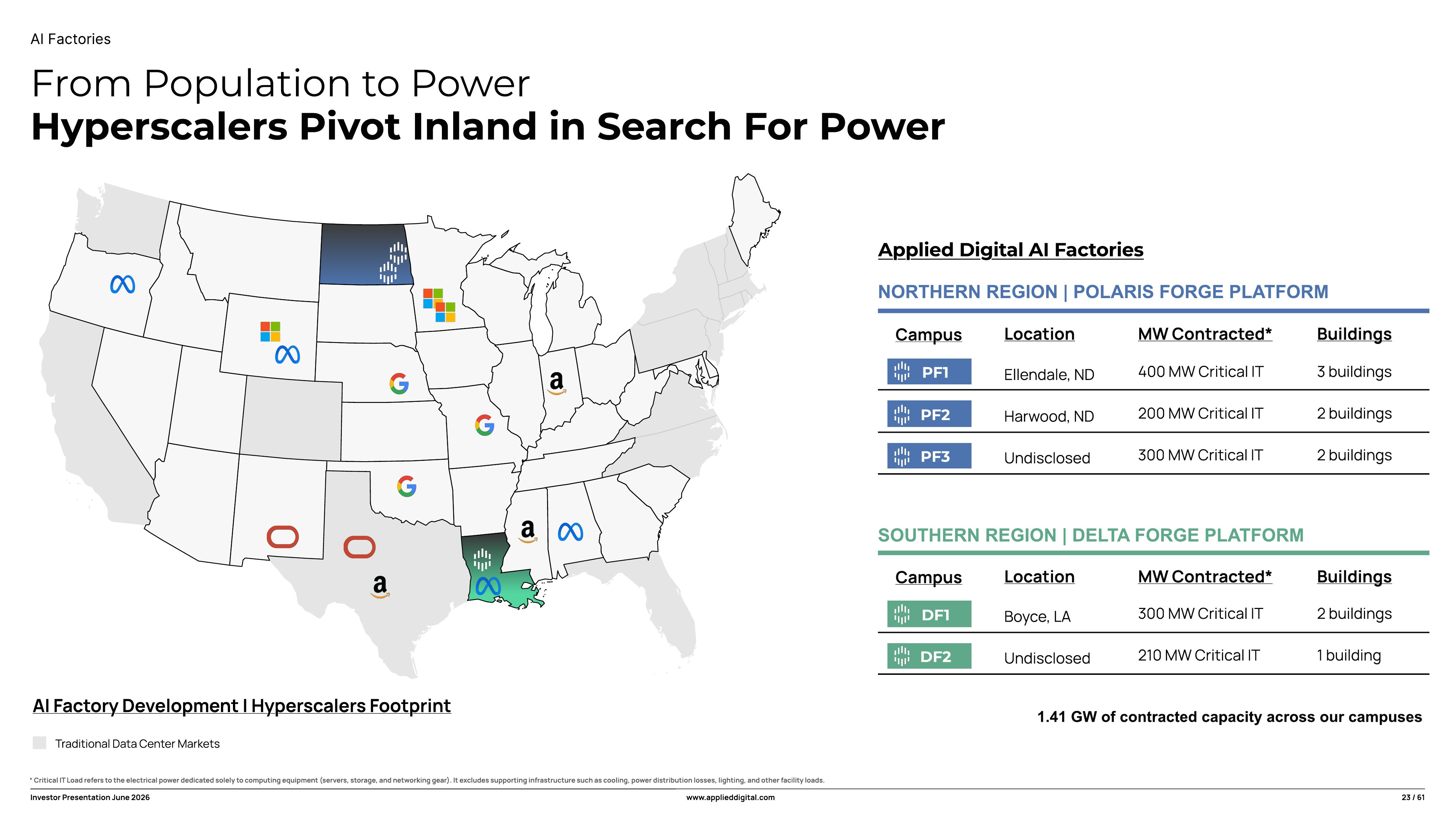
APLD
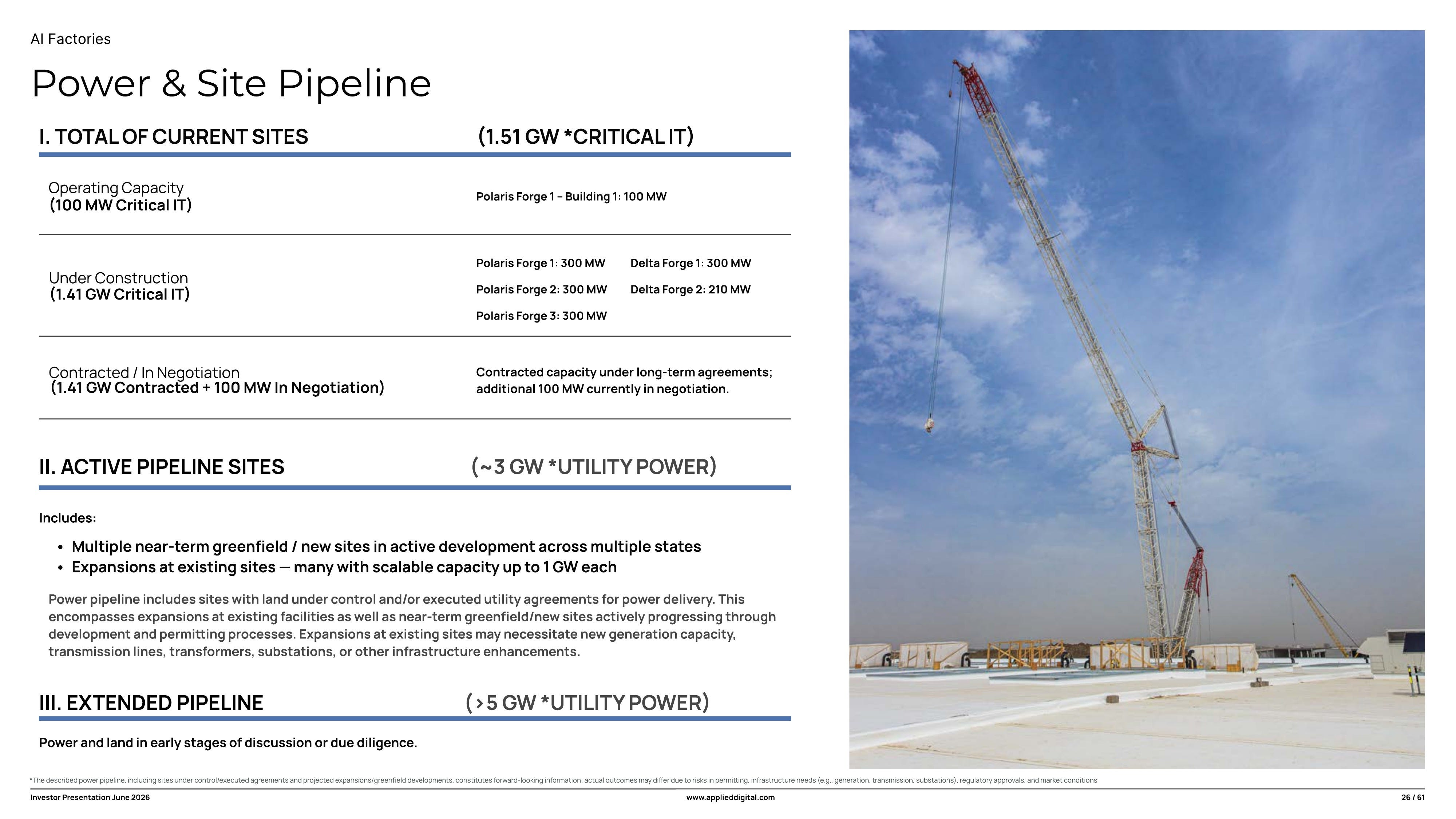
Applied Digital is also delivering in phases, and currently has shown progress. From last quarter ending in May this year to the last June quarter it increased from 100 MW to 175 MW. It still has 286 MW that is rented to a bitcoin operator and they have stated no current intentions to change that. However, it is important to note that the current contract runs out in 2027, so they have optionality with this space. They have data centers exclusively in the United States with many additional sites coming online during the remaining half of this year, 2026, and throughout 2027 and 2028.
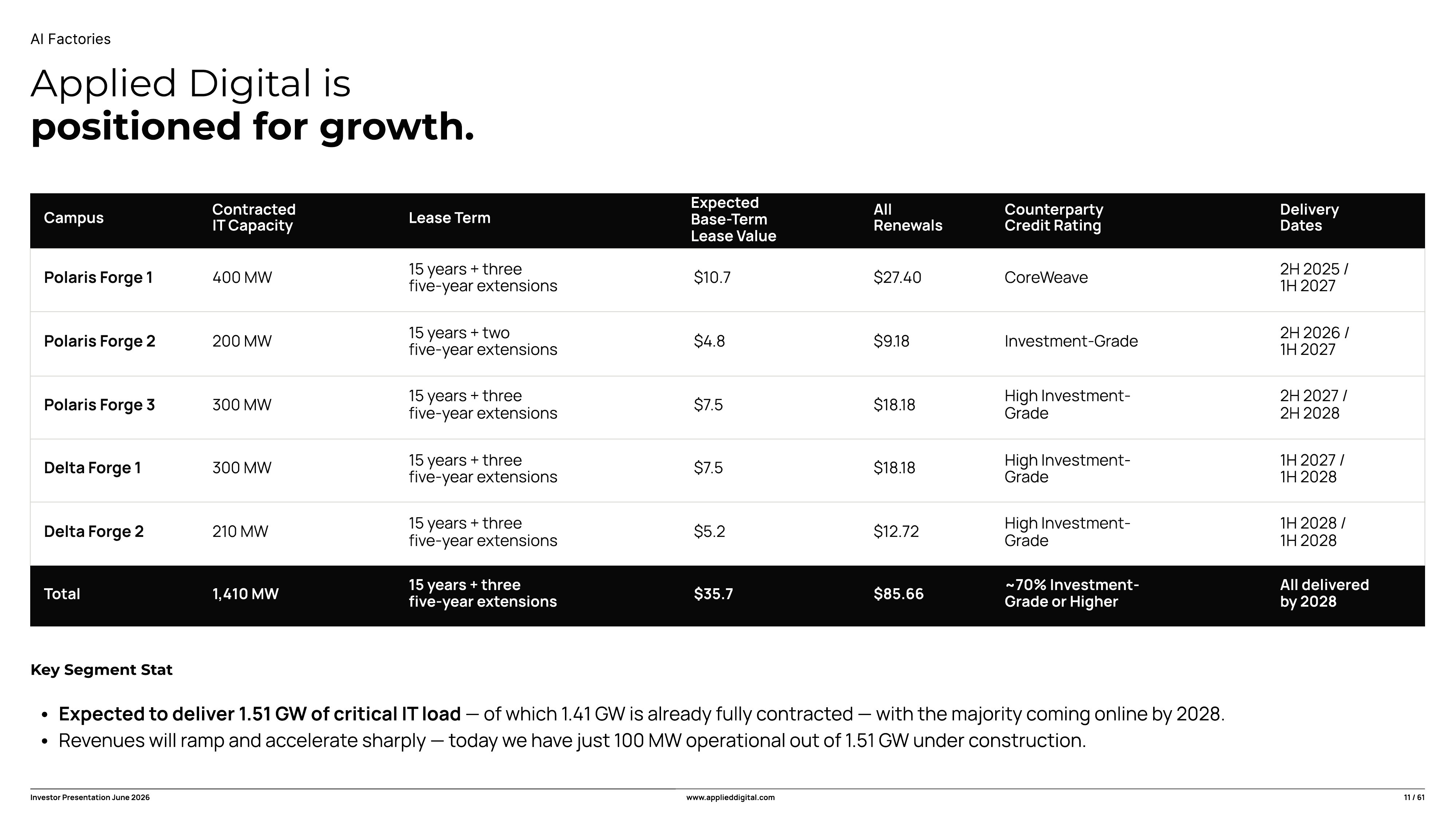
Also important is APLD is a landlord, and their income has no connection with the price of bitcoin. Their future plans are shown here in their recent company deck. It summarizes as reaching 1.41 GW all delivered by 2028.
NBIS
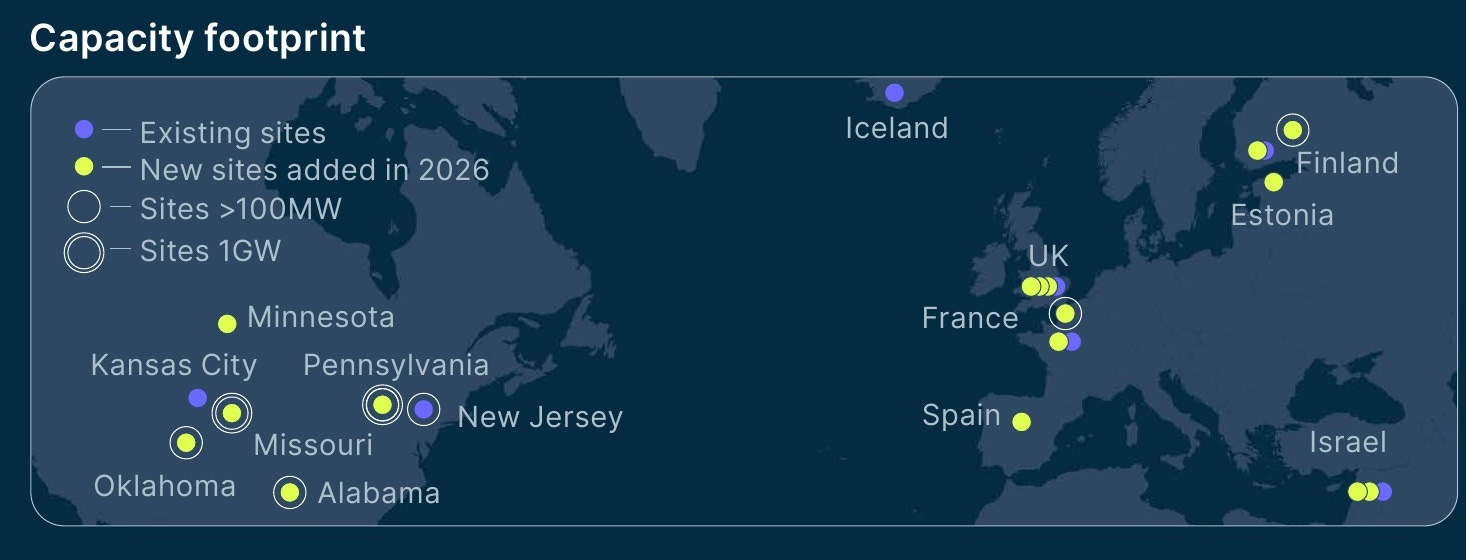
Nebius currently has between 175-250 MW active with 800–1,000 MW expected to be reached by the end of the year. The CEO states that their capacity build-out is accelerating, and he is expecting to deploy over 1 GW per year in 2027, and each year after. They have talked about 5GW as “contracted power” by year end, but it will be years before that is active MW. They are the most geographically diverse of the group, and has many sites throughout Europe and the US.
Coreweave
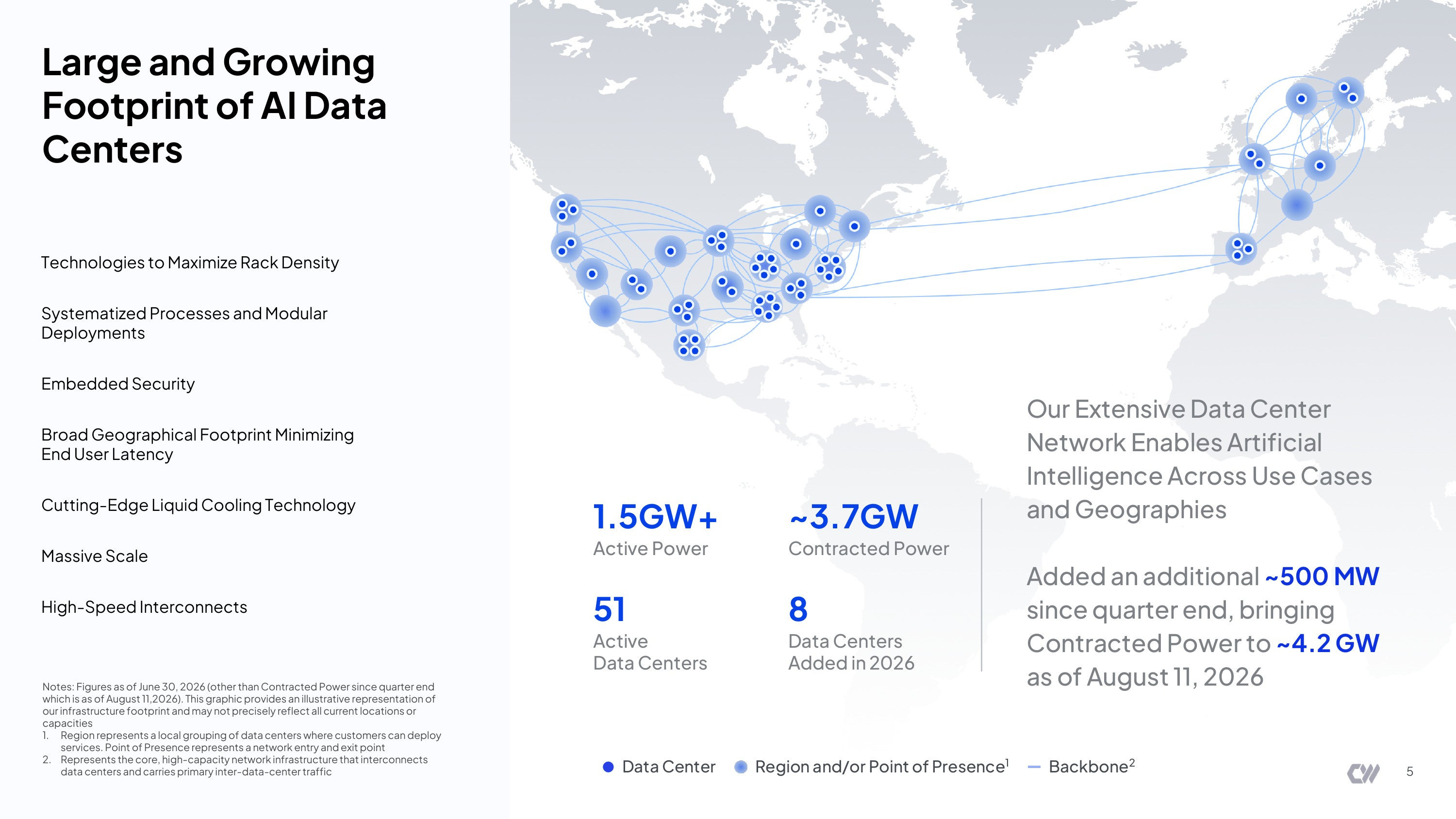
Currently it has 1,500 MW active power and forecasts to reach 1,850 MW by year end. With their focus on the GPU and software layers, it’s spending less on facilities, and they have used that extra capital on GPUs allowing it to scale up to the highest active MW in the group. The forecast is also the highest in the group with plans to reach 3 GW active by the end of 2027, and more than 8 GW active by the end of 2030. Behind this sits an active 4.2 GW in “contracted power” which is up from 3.7 GW is contracted power, so it’s great to see the future active power under the initial power stage.
Financing the buildout
Buying, converting, cooling, building all of this is very expensive, and all of these companies need to finance their plans. GPUs are crazy expensive, and since they are losing money, where is all the money to build these data centers coming from? So we need to look into how much each is paying to build their neocloud future.
Applied Digital has the most expensive cost of capital. They took on $6.9 billion in project bonds paying high interest between 6.75% and 9.25%. Over 4 Billion of this will come due in 2030 to 2031, so will likely need refinancing. On top of that, APLD set up a preferred program that brought in 1.8 billion and compounds at 12.75%, and go up from there, and comes with guarantees of 1.8x to 2.0x return. They are also issuing stock, and diluting shareholders by adding 53 million new shares, and there was another 10 million for stock based compensation so, 63 million in newly minted common shares. This brought in roughly $1 billion over the past thirteen months. I also need to include that 21.5 million warrants, 7% of the company shares, were given to CoreWeave just to get them to sign the initial leases. This is the worst financing of the group.
IREN somehow tops APLD in stock dilution. Iren basically used its own stock as a limitless credit card. Over the past year, their share count grew by more than 70%, jumping from around 224 million shares to over 380 million. They brought in over $2.5 billion from these issues, and they are also borrowing additional capital in the form of convertible bonds paying virtually 0% to 1% interest. These bonds are covertible to more IREN stock down the road depending on value. In some good debt news, Wall Street lenders finance 90% to 96% of their actual GPU hardware costs at single-digit rates. This is due to the already contracted AI compute agreements signed with Microsoft and other high investment grade clients.
Nebius has the best funding news in the entire group because their customers are paying the bill upfront. About 70% of their customer deals require 50% to 60% upfront payments to reserve cluster capacity. The prepayment funds are on their balance sheet as about $6 billion in deferred revenue, giving them a total around $8 Billion in cash at the end of last quarter. They use some low-rate convertible notes as well but they don’t need to take on high interest debt to fund their future. They have also done some dilution but at an understandable rate. First, they did it after their shares had risen to new highs, and did a reasonable 14%, or about 17.5 million shares. Funding a 1 GW buildout / year will take more capital than their $8 billion so this is understandable.
CoreWeave is running with maximum financial leverage. They have over $16 billion in lease liabilities for the buildings it rents, and $35 billion in total debt. The Debt to equity ratio is 10.87, compared to APLD at 2.86, IREN at 1.87 and NBIS at 0.97. Coreweave utilizes convertible bonds, alongside billions in senior notes paying 8.5% to 9.75% interest. So the company relies entirely on outside funding to work, and their current debt leaves them a quarterly interest bill of more than $640 million. They can service that debt as long as their contract backlog continues to convert into revenue, but readers should know their rating status is currently at junk. Their shares have also been diluted as some of the convertibles have come due. They recently issued more debt, and the financiers demanded a higher rate.
Coreweave raises yields to entice investors
Comparing them all, customer prepayments king, NBIS, comes out on top as the cheapest financing, and they have 2 billion in cash on the books, left over from the Yandex corporate split. Next is IREN with its 0 to 1% coupon convertible debt, then the highly leveraged CoreWeave, and last the high interest construction bonds with warrants, and due dates, APLD.
That's part one, tomorrow we will look at what all four are actually making in revenue right now, and what each one makes per megawatt that's live and billing, and how that is changing rapidly. I’ll give you the insights I learned while doing this research and then I'll tell you which ones I'd put money into and why. Stay tuned, subscribe.